
- Home
- Coin
- American Eagle (3569)
- American Eagle T-2 (2)
- American Gold Eagle (8)
- American Prospector (2)
- Canadian Wildlife (6)
- Double Eagle (2)
- Flying Eagle (3)
- Gold American Eagle (3)
- Indian Head (2)
- Mixed Lot (15)
- Palladium Eagle (3)
- Pattern Double Eagle (5)
- Peace Dollar (3)
- Proof Silver Eagle (4)
- Silver Eagle (30)
- Ultra High Relief (3)
- Walking Liberty (5)
- Wedge Tailed Eagle (5)
- Wedge-tailed Eagle (4)
- Wedgetail (3)
- Other (1211)
- Composition
- Fineness
- Grade
- Strike Type
- Antiqued (3)
- Bullion (3)
- Burnished (64)
- Business (1736)
- Business & Proof (2)
- Business Strike (3)
- Colorized (3)
- First (5)
- Galvanized (4)
- High Relief (2)
- Matte (19)
- Mint State (44)
- Proof (1467)
- Proof Deep Cameo (21)
- Proof Overstrike (3)
- Proof, Reverse Proof (2)
- Proof-like (30)
- Reverse Proof (26)
- Satin (21)
- Uncirculated (13)
- Other (1417)
- Year
2000 West Point Silver Eagle 1 oz. 999 Fine Silver Natural Toner Color Beauty
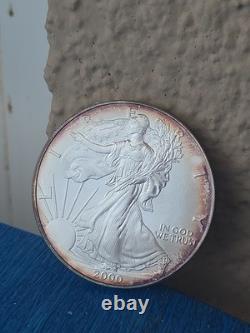
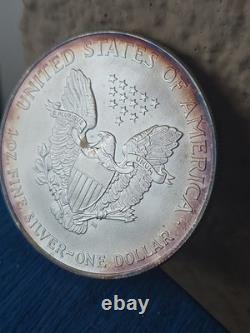
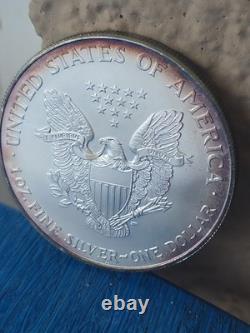
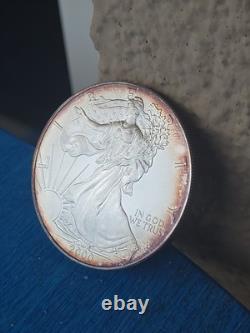
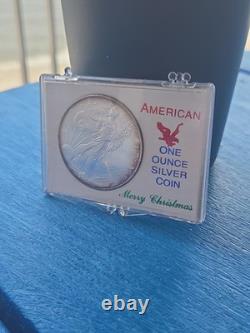
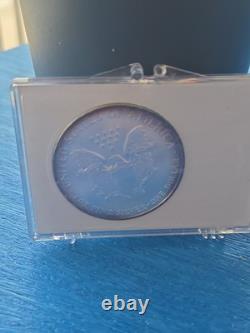
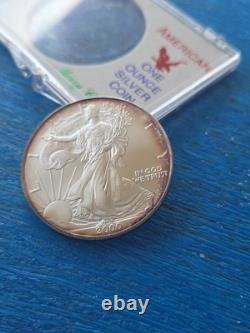
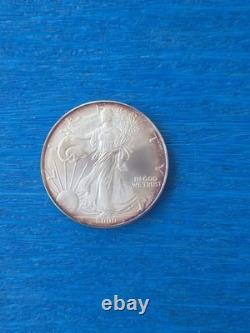
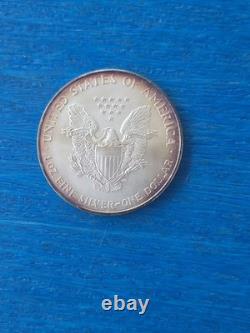
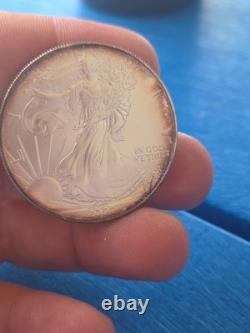
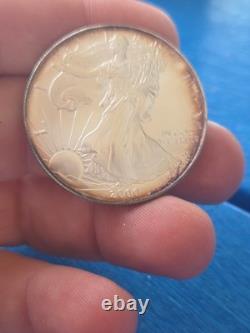
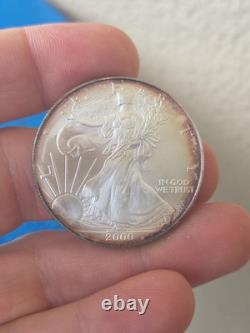
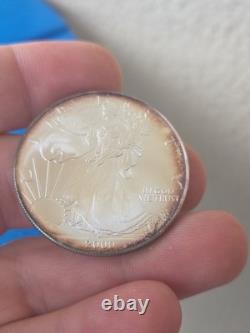
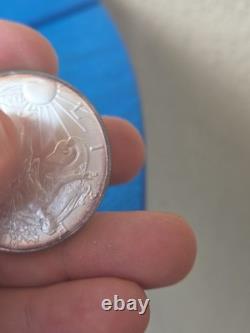
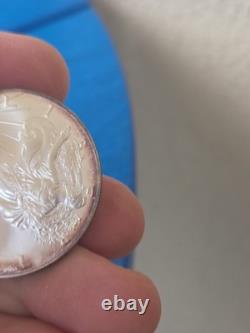
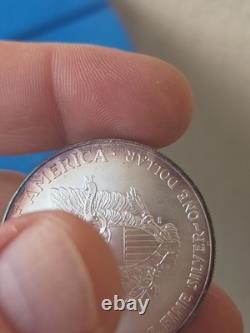
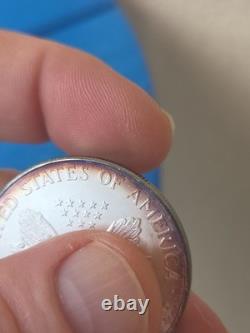
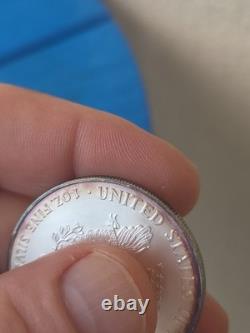
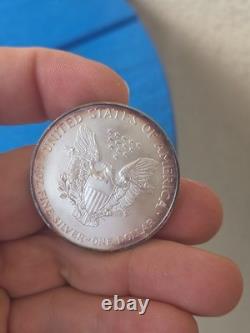
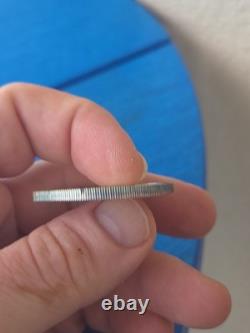
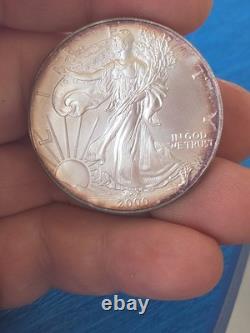
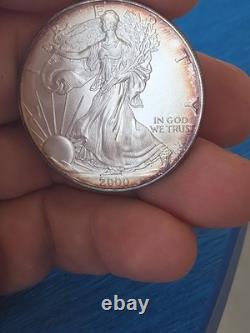
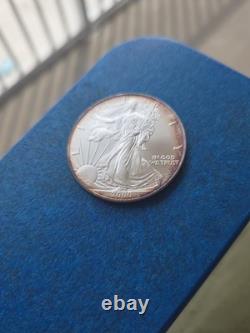
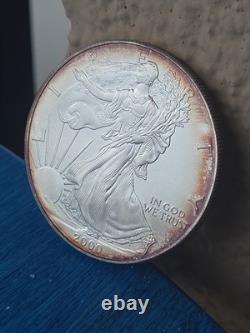


This is a genuine 2000 American Silver Eagle with outstanding natural original toning - the kind collectors call an ace toner. Soft golden-amber, rose, and subtle violet hues hug the rims and devices on both sides, giving the coin warm, original skin that pops under light. Still fully lustrous underneath with strong cartwheel. Exactly as pictured - raw, ungraded, and still sitting in its original plastic snap case with the classic red eagle and green "Merry Christmas" script. Mint: West Point (no mint mark on bullion issues).
Who made it, when, and why. Struck by the United States Mint in 2000 as part of the official American Eagle Silver Bullion Coin Program, authorized by the Liberty Coin Act of 1985 and first released in 1986. The goal was simple: give American investors a government-guaranteed, pure-silver bullion coin with legal-tender status. Silver for the early years (including 2000) came largely from the National Defense Stockpile. 2000 was a strong year - Y2K anxiety and renewed interest in precious metals pushed sales to over 9.2 million coins, the second-highest mintage of the series up to that point.
Lady Liberty strides toward the rising sun, draped in the American flag, holding oak and laurel branches. Reverse - John Mercanti's heraldic eagle with shield, clutching arrows and olive branch, 13 stars above. How silver tones (the natural way). Pure silver reacts slowly with tiny amounts of sulfur compounds (mainly hydrogen sulfide) that are always present in the air.
This forms an ultra-thin layer of silver sulfide on the surface. As the layer grows, light interferes with itself (thin-film interference) and produces the classic progression of colors: pale gold?
When a coin sits for years in a plastic holder, paper envelope, or album under normal household conditions, the toning develops gradually and unevenly - following the high points and recessed areas of the design. That is exactly what you see here: original, natural toning that cannot be perfectly faked. Raw uncirculated with attractive original toning. Comes in the plastic snap case shown (case has light surface wear from age).Securely packaged so it arrives safe. My shop has many more rare and beautiful coins from around the world - check out the rest of my listings for other toned Silver Eagles, key-date U. Coins, world silver, and more.
Thanks for looking - this one is a real eye-catcher that will stand out in any ASE or toned-coin collection!